Step 01
Search your area
Enter your zip, city, or state and the crop you grow. We map operators whose listed service areas cover your fields.
Coverage
Your area
Operators
Mapped live
Compare per-acre rates, coverage, and reviews from West Virginia operators side by side — then request quotes in one step. Always free for farmers — no obligation.
Rather not browse? Get matched with quotes →
Tell us about your field once, and we’ll match you with verified drone sprayers who cover your part of West Virginia. Compare their quotes side by side — no fees, no obligation.
Takes about a minute.
Spray drones reach what ground rigs and planes can’t — precisely, and without tearing up your soil. And they get better every season: bigger tanks, more acres an hour, tighter precision.
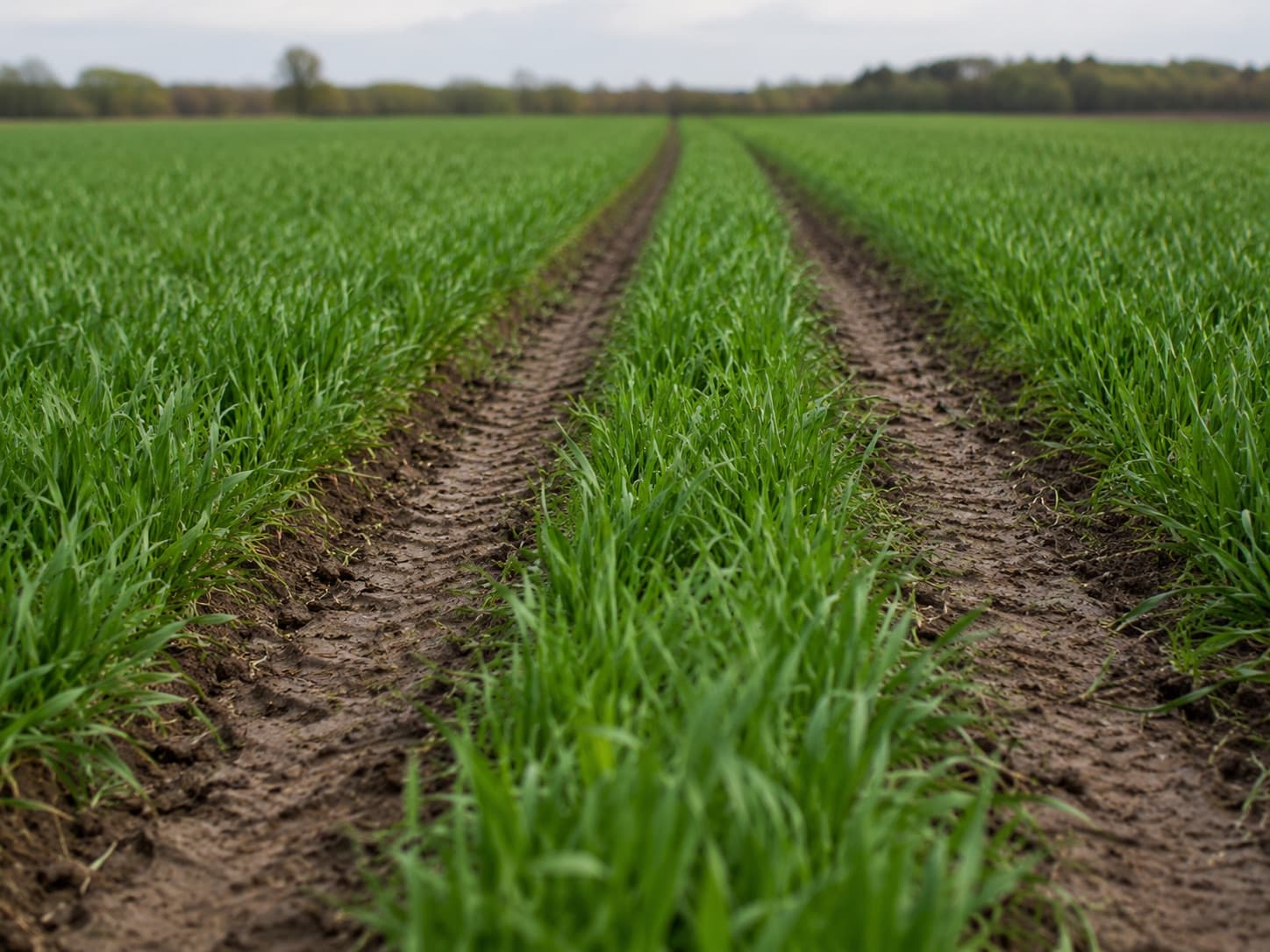
Fly above the canopy — no heavy wheels packing soil or crushing rows on wet ground.
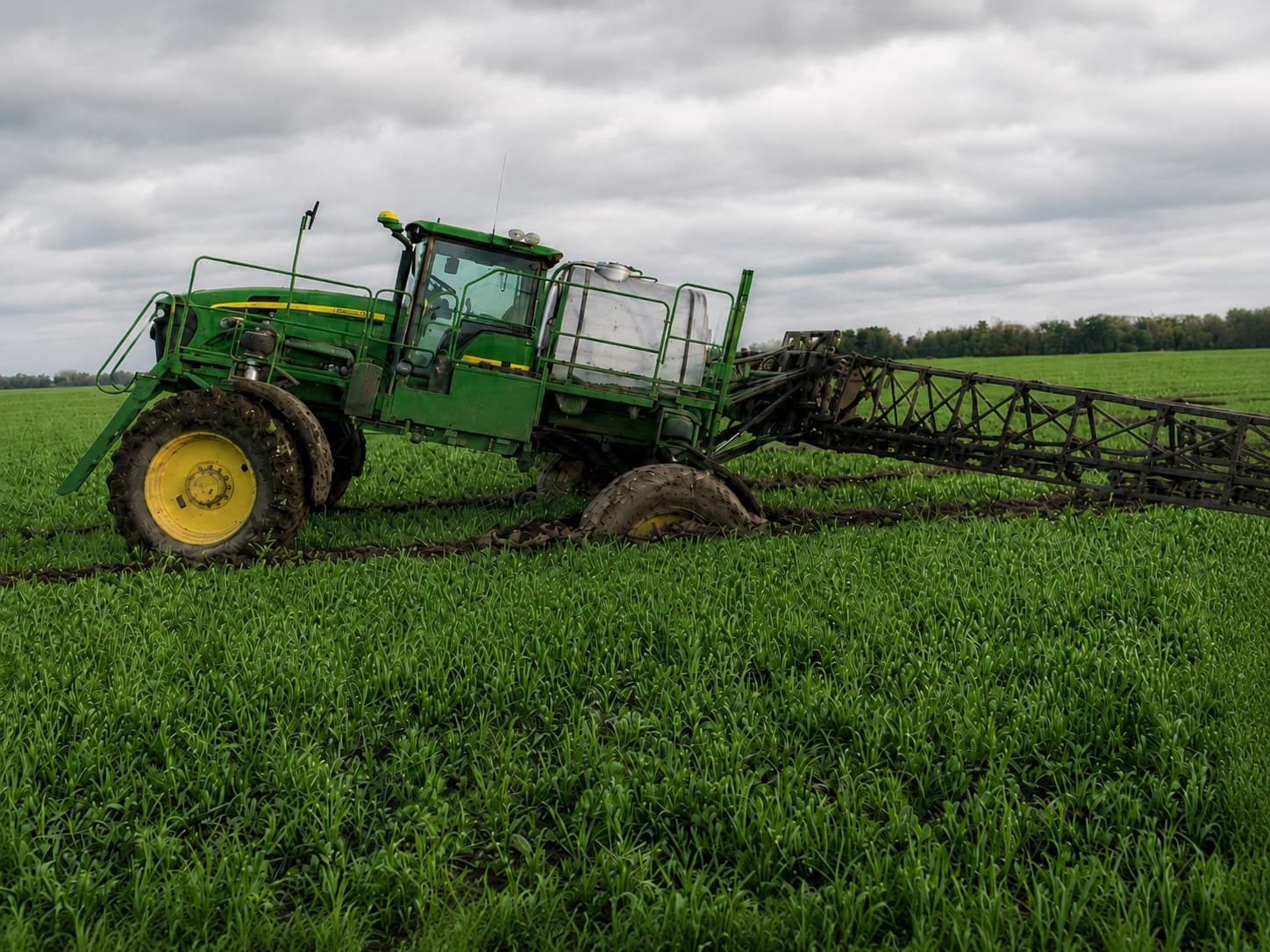
Wet ground, tall canopy, terraces, point rows, odd-shaped parcels — go where ground rigs can't.
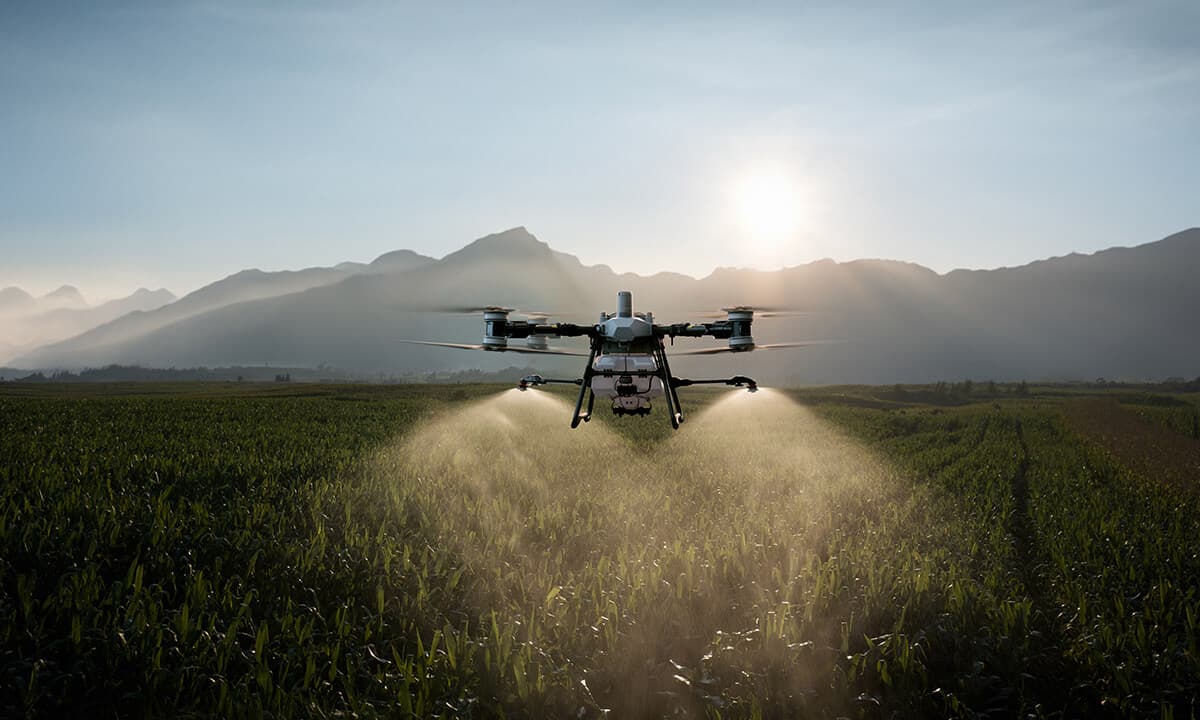
Centimeter-accurate GPS puts product exactly where it's needed — with far less drift.
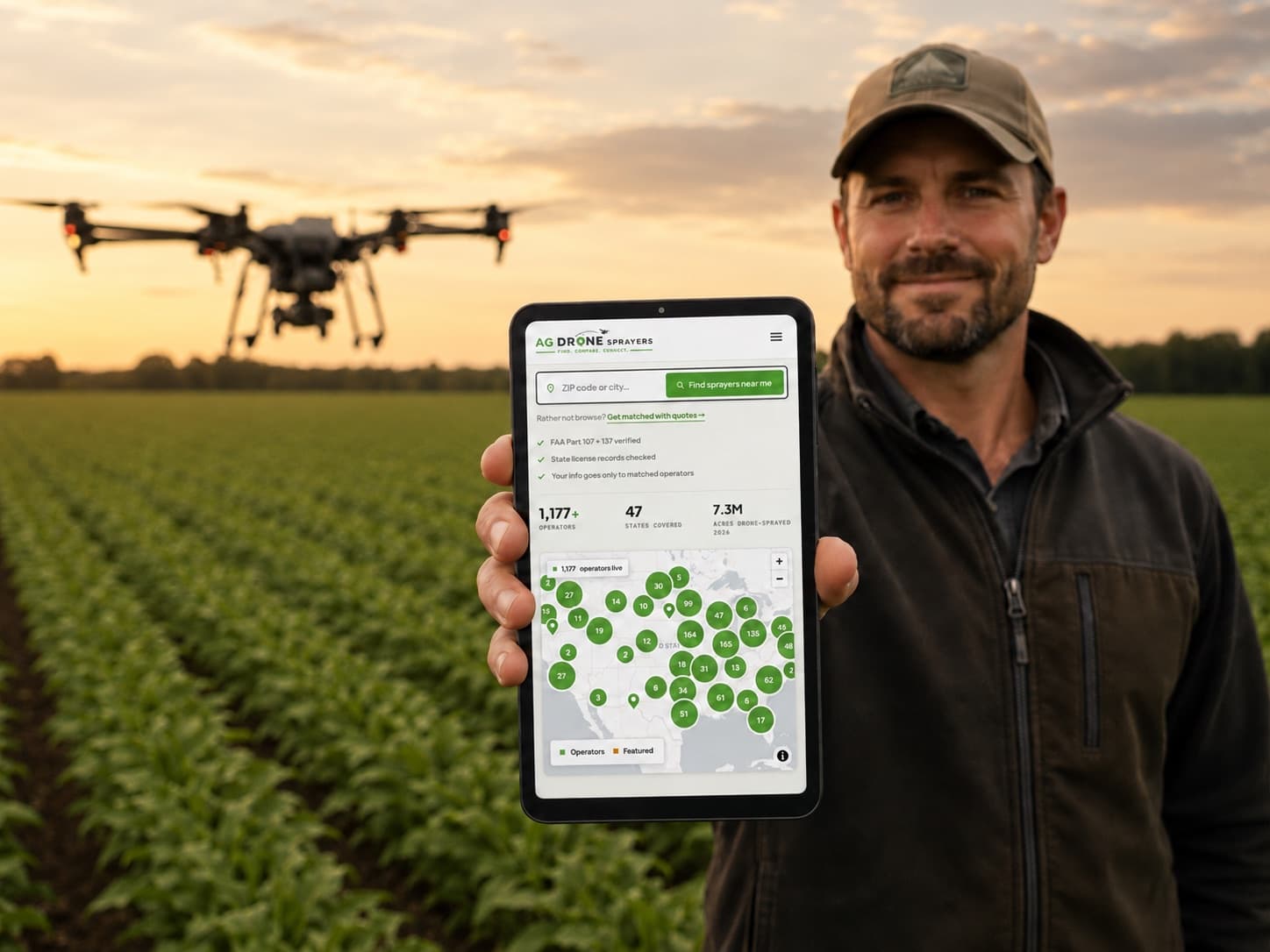
Competitive with manned aerial — and you get centimeter precision and zero compaction, not just coverage.
Hiring a drone to spray your fields is simpler than most growers expect — and the drones get more capable every season, from RTK spot spraying (GPS accurate to within half an inch) to bigger tanks covering more acres an hour. No account to create, no fee to you.
Free for farmers — operators respond directly with availability and pricing.
Enter your zip, city, or state and the crop you grow. We map operators whose listed service areas cover your fields.
See certifications (Part 107 & 137), insurance, pricing, and reviews side by side. Sponsored placements are labeled.
Send one request and hear back from operators directly. No fees, no middleman, no obligation — you choose who treats your fields.
Typical 2026 rates for one drone pass in West Virginia, application only; the product is billed separately. Crops that need more water per acre or more passes cost more.
| Crop | Per acre, one pass | Water per acre | Passes per season |
|---|---|---|---|
| Alfalfa & Hay | $12–$27 | 2–3 GPA | 1+ between cuttings (weevil, aphid) |
| Corn | $12–$28 | 2–3 GPA | 1–2 (fungicide at tassel, ± a foliar/nitrogen pass) |
| Soybeans | $12–$28 | 2–3 GPA | 1–2 (R3 fungicide/insecticide) |
| Wheat | $12–$28 | 2–3 GPA | 1 (flag-leaf to heading fungicide) |
| Apples | $22–$45 | 5–10 GPA | Multiple (scab + codling moth, 10–15 sprays) |
| Orchards | $22–$45 | 5–15 GPA | Many (fungicide/insecticide program) |
Every crop, with sources: drone spraying cost in West Virginia.
Draw it on a satellite map to get exact acreage — plus an instant cost estimate.
Counties with for-hire drone-spraying operators covering them.
Towns with for-hire drone-spraying operators covering them.
We review FAA Part 107, Part 137, and §44807 records where applicable, plus state licensing, business registration, and operator-provided insurance. A daily check agent keeps verification signals current.
How verification worksWest Virginia's apple and peach orchards, hay, and pasture sit on steep, mountainous ground where drones reach terrain ground equipment can't safely work.
Across the Mid-Atlantic, growers hire drone operators to put fungicides, herbicides, and fertility on the right way at the right time — with RTK guidance (GPS accurate to within half an inch) and variable-rate control, and no wheel tracks or soil compaction anywhere. Drones reach the canopies too tall to drive through, ground too wet to roll on, and steep or oddly shaped fields a self-propelled sprayer can’t cover. Compare West Virginia operators above by FAA certification, equipment, per-acre pricing, and grower reviews, then request free quotes.
Think of it as crop dusting by drone: near West Virginia, operators put fungicides, herbicides, and fertility on from the air — but with a spray drone rather than a manned aircraft.
West Virginia’s leading drone-sprayed crops — tap a crop to see how aerial application works for it and find operators with that experience.
West Virginia operators do more than spraying — explore each service and find operators with that experience.
Spraying crops by drone for hire is regulated at both the federal and state level. Federally, an operator needs an FAA Part 107 remote pilot certificate and a Part 137 agricultural aircraft operator certificate to dispense crop-protection products; drones over 55 lbs also require a Section 44807 exemption. These rules are the same in West Virginia as everywhere in the U.S.
On top of that, applying pesticides commercially in West Virginia requires a commercial pesticide applicator license issued by the West Virginia Department of Agriculture. When you compare operators on Ag Drone Sprayers, look for these credentials on each profile — listing them is how a reputable operator shows the work will be done legally and safely.